
Reading Nafplio history in the landscape
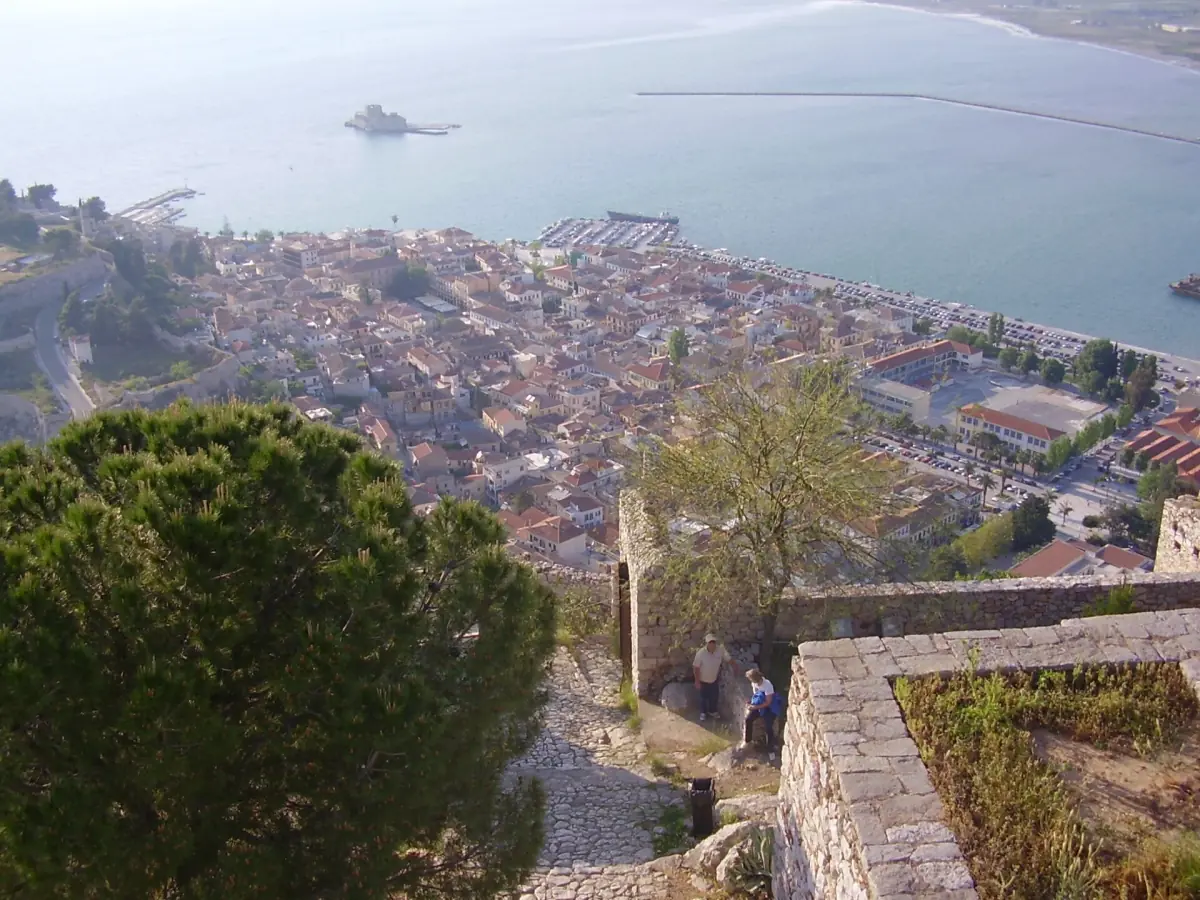
Nafplio history makes more sense when you separate its three fortified landmarks. Akronafplia occupies the peninsula, Palamidi rises above the town and Bourtzi stands on an island at the harbour entrance. They belong to different building phases and have different approaches. Looking at them together gives a useful introduction to a city where military architecture and the streets of government sit close to the sea.
The old town combines Venetian and neoclassical buildings, Ottoman fountains and narrow paved lanes. These features are useful starting points for looking closely rather than assigning every street to a single era. For the practical details of visiting the monuments, use the Nafplio sights guide; this page follows the historical connections between them.
Akronafplia and the older fortified town
The earliest surviving fortification phase at Akronafplia dates from the end of the fourth century BC. Byzantine, Frankish and Venetian rebuilding followed. Castello di Toro and the Sagredo Gate belong to this layered complex. Its walls are therefore a record of repeated adaptation rather than the remains of one construction campaign.
Venetian expansion created the lower town north of the old castle, while Akronafplia later acquired a predominantly military role. This relationship between the fortified height and the town below helps explain the cityscape. When planning a walk, treat gates and enclosed sections as individual access points and follow local barriers. A historical description of the peninsula is not a timetable for its entrances.
Our picks: Nafplio history walk
The walking tour pairs Nafplio history with a tasting of local produce.
Hand-picked tours, booked through GetYourGuide. Prices are indicative starting prices in euros (as of October 2026). Tap a tour for live availability and the current price in your currency.
A walk through the historic city
An English-speaking city walk with local tastings offers a way to connect the streets with the history of Nafplio.
Venetian and Ottoman phases at Palamidi and Bourtzi
Palamidi is a Venetian Baroque fortress with eight bastions, completed in 1714. Ottoman forces captured it in 1715, and it passed to the Greeks in 1822. Those dates make the fortress a clear example of how a building could outlast the government that commissioned it. Its military form is part of the history, not simply a platform for a view.
Bourtzi began as a Venetian island fortification at the harbour entrance, later passed through Ottoman and Greek phases and also served as a hotel in the twentieth century. It is a separate cultural monument reached by boat from Nafplio. A city walking tour should be understood as a walk through the town; the historical tour offered here includes English-speaking accompaniment and local tastings.
The Greek capital, Kapodistrias and Pronoia
Nafplio was the Greek capital from 1827 to 1834. Kapodistrias arrived in 1828, and the development of Pronoia and the Megalos Dromos, now Vasileos Konstantinou, is connected with his period of government. These streets add a different chapter to the fortress landscape: the formation of a capital and the organisation of its urban space.
Kapodistrias was assassinated outside Agios Spyridon in September 1831. The decision to move the capital to Athens followed in September 1834. Keep those events distinct when reading the city: arrival, assassination and the transfer of the capital are separate moments. The old town itself was designated an archaeological site and protected historic monument in 1962.
Syntagma Square, archaeology and historical storytelling
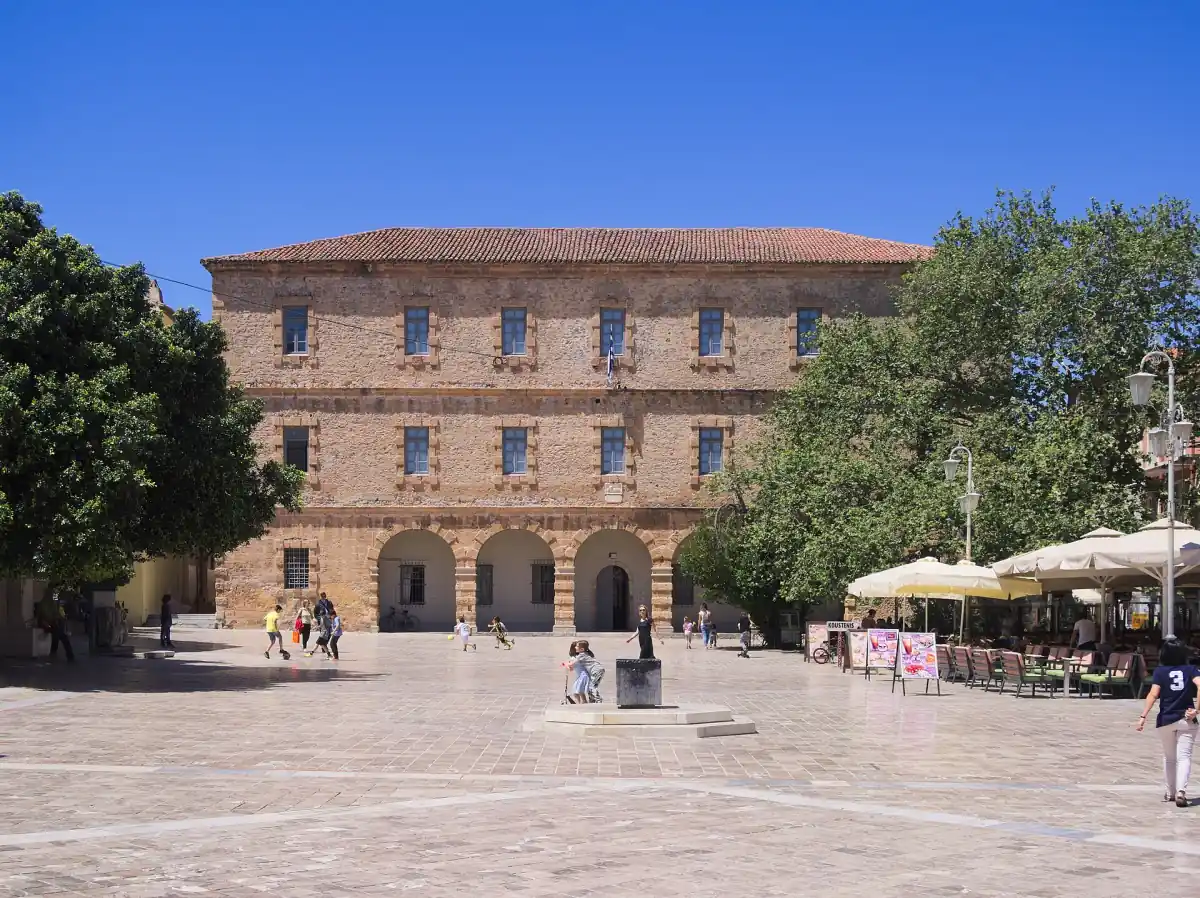
Syntagma Square brings several kinds of building into one setting. The Archaeological Museum occupies a Venetian naval storehouse, the Vouleftiko is housed in a former mosque, and the Trianon is another of the square’s historic landmarks. Looking at their exteriors is a useful way to understand changes of function. Arrange any interior visit around the conditions for that particular building.
For ancient history beyond the town, Mycenae offers a Late Bronze Age palace centre, the Lion Gate, tombs and a museum. Separate archaeological objects from stories attached to them: the original so-called Mask of Agamemnon is in Athens. Mythological names are not a substitute for the dates and physical remains of a site. For a guided interpretation of Nafplio’s streets, continue to historical walking tours.
Frequently asked questions
When was Nafplio the Greek capital?
Nafplio was the capital from 1827 to 1834. Kapodistrias arrived in 1828, and the move to Athens was decided in September 1834.
Are Palamidi and Akronafplia the same fortress?
They are separate complexes. Akronafplia occupies the peninsula below Palamidi and preserves several successive fortification phases.
Does the historical walk include a boat to Bourtzi?
The selected experience is a city walking tour with English-speaking accompaniment and local tastings. Plan an island visit separately from the walk.